
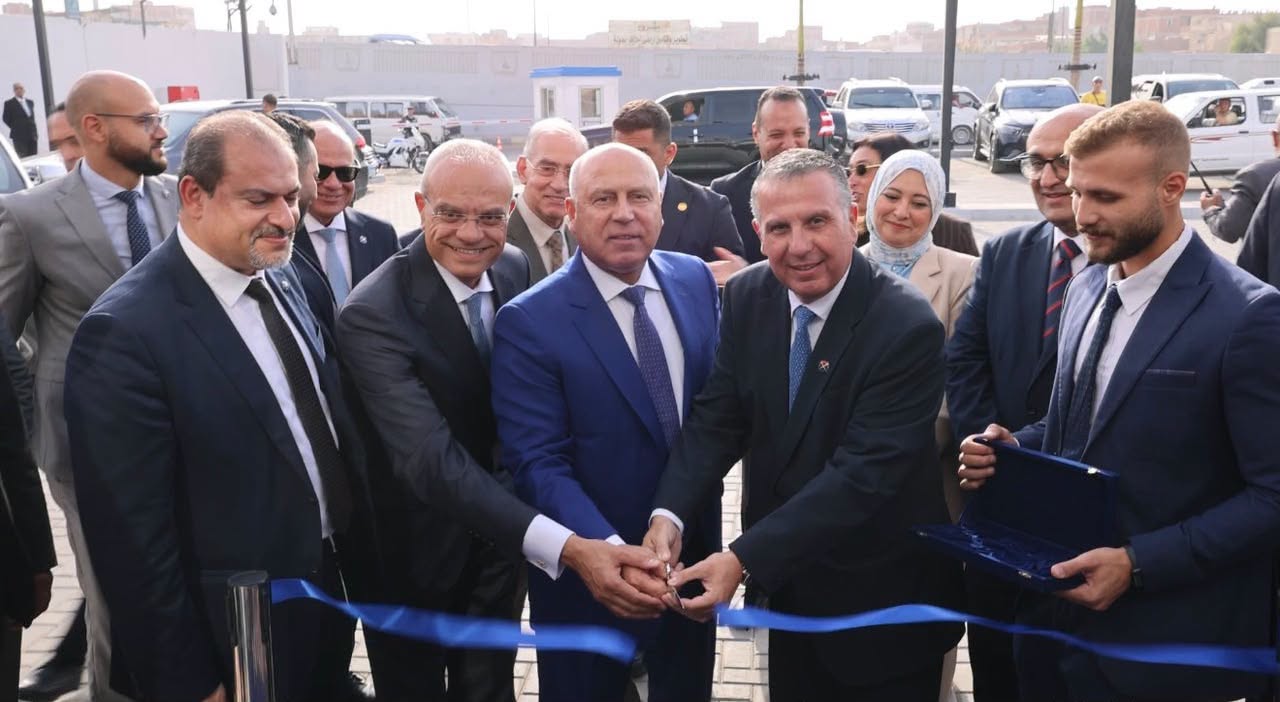
Transport Minister Inaugurates Amreya Dry Port in Alexandria with Investments of EGP 700 Million
In line with the President’s directives to position Egypt as a regional hub for transport, logistics, and transit trade
The Minister of Transport:
- A new step towards enhancing the integration of the transport and logistics system and consolidating Egypt’s position as a regional hub for transport and transit trade.
- Amreya Dry Port is the second dry port after 6th of October Dry Port, which has witnessed a 500% increase in its current cargo throughput. Dry ports are among the key components of the eight integrated international logistics and development corridors currently being implemented.
- As part of the plan to transform Egypt into a regional hub for transport, logistics, and transit trade, the development and construction of 9 land ports, 33 dry ports, and logistics zones are underway across the country.
H.E. Lieutenant General Engineer Kamel El-Wazir, Minister of Transport, inaugurated Amreya Dry Port in Alexandria Governorate, in the presence of Major General Magdy Anwar, Director of the National Service Projects Organization; Dr. Amira Yassin, Deputy Governor of Alexandria; and Eng. Sayed Metwally, Chairman of the General Authority for Land and Dry Ports.
At the beginning of his speech, the Minister extended his congratulations to the attendees, the Egyptian people, and the heroes of the Armed Forces on the occasion of the glorious October Victory celebrations. He expressed his pleasure at inaugurating Amreya Dry Port, which represents a new step in developing Egypt’s transport and logistics system and strengthening Alexandria’s capacity to serve trade and production activities. He also extended his sincere appreciation to all state institutions, workers, engineers, and technicians who contributed to completing the project.
Lieutenant General Engineer Kamel El-Wazir affirmed that the inauguration of the dry port is not merely the addition of a new facility to Egypt’s transport network. Rather, it represents an advancement in the mechanisms for moving goods from seaports to markets and production zones. It enables shipping, storage, and cargo-handling procedures to take place away from seaport quays, helping improve cargo flows, reduce congestion and pressure on ports and roads, and strengthen connections between ports, industrial centers, and distribution hubs.
The Minister explained that this initiative falls within the Ministry of Transport’s strategy to integrate different modes of transport, seaports, and logistics zones, while facilitating the movement of goods by sea, road, and rail more efficiently. This will help reduce waiting times and transportation and handling costs, enhance the competitiveness of the Egyptian economy, and improve the ability of Egyptian products to reach international markets.
The Minister highlighted the implementation of national projects under the plan to establish eight integrated international logistics and development corridors. These corridors aim to connect industrial, agricultural, mining, and service production areas with seaports through fast and secure transport networks, passing through dry ports, integrated logistics zones, road networks, railways, and the high-speed electric train network. These projects will serve new urban communities and support Egypt’s transformation into a regional hub for transport, logistics, and transit trade.
The plan also includes completing the development and construction of nine land ports along Egypt’s borders to strengthen connectivity with neighboring countries. The latest of these projects is the Al-Kufra Land Port, currently under construction as part of the Berthes–Aswan–East Oweinat–Al-Kufra–N'Djamena corridor, which aims to enhance trade links with Libya, Chad, and Central Africa. In addition, a comprehensive master plan is being implemented to establish 33 dry ports and logistics zones across the country.
The Minister added that developing land ports, dry ports, and logistics zones aims to improve services, reduce cargo and container congestion at seaports, lower transportation costs, facilitate trade, and connect manufacturing areas with consumption centers. These projects will also help regulate truck movements, ease pressure on roads, and reduce their associated environmental impact.
The Minister emphasized the strategic importance of the Amreya area due to its location in Alexandria Governorate, its significant commercial and industrial activities, and its connectivity with seaports and transport networks. He explained that the new dry port will support the integration of cargo movements between the Greater Alexandria Port and economic activity zones, provide logistics services closer to businesses, and contribute to better cargo-flow management.
He further clarified that the project was established for the National Refrigeration and Supplies Company, affiliated with the National Service Projects Organization, on an area of 146,000 square meters, with investments amounting to EGP 700 million. The project represents a significant addition to Egypt’s transport and logistics system due to its proximity to the first line of the high-speed electric train network and the existing diesel railway network. This location will strengthen services for the business community, facilitate trade flows, and accommodate a wide range of logistics activities.
The Minister noted that Amreya Dry Port is the second dry port after 6th of October Dry Port, which has recorded a 500% increase in cargo throughput. He also referred to Qantara East Dry Port, which is planned to commence operations, and 10th of Ramadan Dry Port, currently under construction. The latter is linked to a logistics zone covering a total area of 250 feddans, with completion scheduled for mid-2027.
Furthermore, feasibility studies are being planned for completion, with construction of Sadat Dry Port and Borg El Arab Dry Port expected to begin before the end of the current year.
The Minister explained that the Ministry has completed legislative reforms to the regulations governing dry ports and logistics zones. These reforms support the expansion of such facilities, promote multimodal transport, reduce transportation costs, lower prices and accident rates, preserve Egypt’s road network, broaden the investment base, and create opportunities for investors with medium-sized financial resources. This will generate employment opportunities, encourage the deployment and circulation of Egyptian capital, and stimulate investment and economic activity.
He added that the Ministry of Transport places great importance on partnerships with the private sector in implementing and managing transport and logistics projects. Such partnerships leverage specialized expertise, improve operational efficiency, and ensure project sustainability through clearly defined responsibilities and service standards that serve the public interest and maximize the economic returns on the infrastructure developed by the state.
The Minister stressed that developing roads, railways, ports, and logistics zones constitutes an integrated system supporting national development. This system enables factories to access raw materials and markets, farmers to transport their produce, exporters to meet delivery schedules, and seaports to manage cargo movements more efficiently.
At the conclusion of his speech, the Minister thanked all entities, companies, and personnel involved in the project, particularly Alexandria Governorate, the National Service Projects Organization through the National Refrigeration and Supplies Company, and the General Authority for Land and Dry Ports.
He praised every Egyptian who contributed to completing the project and expressed his hope that the new dry port would provide added value to the national economy, support the state’s efforts to develop the transport and logistics system, and contribute to achieving comprehensive and sustainable development.